
Hydrobromic Acid Industry Research: the global market is projected to reach US$2.36 billion by 2032
クレジット

イラストレーター
Hydrobromic Acid Industry Research: the global market is projected to reach US$2.36 billion by 2032
The global market for Hydrobromic Acid was estimated to be worth US$ 1033 million in 2025 and is projected to reach US$ 2363 million, growing at a CAGR of 2.7% from 2026 to 2032.
Global Market Research Publisher QYResearch (QY Research) announces the release of its latest report “Hydrobromic Acid - Global Market Share and Ranking, Overall Sales and Demand Forecast 2026-2032”. Based on 2025 market situation and impact historical analysis (2021-2025) and forecast calculations (2026-2032), this report provides a comprehensive analysis of the global Hydrobromic Acid market, including market size, market share, market volume, demand, industry development status, and forecasts for the next few years.
The report provides advanced statistics and information on global market conditions and studies the strategic patterns adopted by renowned players across the globe. As the market is constantly changing, the report explores competition, supply and demand trends, as well as the key factors that contribute to its changing demands across many markets.
【Get a free sample PDF of this report (Including Full TOC, List of Tables & Figures, Chart)】
https://www.qyresearch.com/reports/5493113/hydrobromic-acid
Hydrobromic Acid: A Foundational Product in the Bromine Value Chain
Hydrobromic acid is a strong inorganic acid formed by dissolving hydrogen bromide gas in water.
It is usually supplied as a colorless to light-yellow corrosive liquid with a pungent acidic odor.
Beyond Acidity and Bromide Ion Supply
As a basic product in the bromine chemical chain, its value is not defined only by acidity or bromide ion supply.
It is also defined by control of concentration, free bromine, chloride, sulfate, iron, heavy metals, color, and batch consistency.
Position in the Value Chain
It is used in inorganic bromides, organic bromides, pharmaceuticals and intermediates, catalysts and catalyst promoters.
It links upstream bromine resources with downstream fine chemical manufacturing.
Market Size and Growth
The global hydrobromic acid market reached US$1.03 billion in 2025 and is projected to reach US$2.36 billion by 2032, with a CAGR of 2.74% during 2026–2032.
Sales volume is expected to rise from 563.3 K MT to 782.6 K MT over the same period.
A Market Shaped by Stability and Upgrading
Unlike single high-growth specialty materials, the hydrobromic acid market is shaped by stable basic consumption, upgrading demand for higher-quality grades, and recovery from a volatile price cycle.
Pharmaceutical intermediates, agrochemical intermediates, high-purity reagents, electronic chemicals, and PTA oxidation catalyst systems are pushing the industry from ordinary industrial supply toward more segmented, quality-driven service models.
Competitive Structure
The competitive structure includes resource-based global producers, regional bromine chemical suppliers, and Chinese fine chemical participants.
In 2025, ICL-IP ranked first with an 18.23% revenue share, followed by Albemarle, Lixing Technology, Lanxess, and Shouguang Weidong Chemical.
The top five companies together accounted for about 49.57% of global revenue.
Sources of Competitive Advantage
Compared with highly concentrated electronic materials, competitive advantage in hydrobromic acid depends more on bromine resource access, hazardous-chemical compliance, process safety, customer qualification, regional logistics, and downstream bromide integration.
Product Types
By product type, 48% hydrobromic acid remains the mainstream global specification, generating US$815 million in 2025, or about 78.90% of global revenue.
The 62% specification generated US$168 million, accounting for about 16.25%.
48% Specification
The 48% product is widely used in standard industrial synthesis, inorganic bromides, and most fine chemical reactions because it offers good supply stability and operational adaptability.
62% Specification
The 62% product provides higher effective concentration and is used in selected pharmaceutical, agrochemical, flavor and fragrance, and high-end organic synthesis routes.
However, it also requires tighter storage, ventilation, corrosion-resistant equipment, and safety management.
Application Structure
By application, inorganic bromides and organic bromides still form the core consumption base, with 2025 revenue of US$306 million and US$304 million, respectively.
Pharmaceuticals and intermediates generated US$175 million.
Catalysts and catalyst promoters generated US$167 million in 2025.
Pharmaceuticals and Intermediates
Although smaller than the two basic applications, pharmaceuticals and intermediates are expected to grow at a CAGR of 4.35% during 2026–2032, making this the most visible upgrading direction.
Catalysts and Catalyst Promoters
A representative use case is the cobalt-manganese-bromine catalyst system in PTA production.
Here, hydrobromic acid supplies bromide ions to the oxidation catalyst cycle and improves the conversion efficiency and oxidation depth from para-xylene to terephthalic acid.
Regional Landscape
Regionally, Asia Pacific is the largest consuming market, with revenue of US$601 million in 2025 and a global share of 58.13%.
Its revenue is projected to reach US$1.53 billion by 2032, lifting its share to 64.79%.
Asia-Pacific Demand and Production
China, India, Southeast Asia, Japan, and South Korea concentrate pharmaceutical, agrochemical, dye, flame-retardant, electronic material, and base chemical manufacturing.
China is not only an important demand center but also the core production growth region, with output rising from about 240.0 K MT in 2025 to 378.2 K MT in 2032.
Other Regions
North America, Europe, and the Middle East & Africa are smaller in scale but remain important for bromine resources, oilfield chemicals, fine chemicals, and high-value customer qualification.
Future Competition
Over the next several years, competition will shift from pricing of ordinary concentration grades to a broader contest in resource security, quality stability, safety compliance, hazardous-chemical logistics, and high-end customer service.
Winning Capabilities
Suppliers with upstream bromine resources, hydrogen bromide absorption capability, by-product acid recovery, refined analytical systems, and downstream bromide integration will be better positioned to secure long-term orders.
Key end markets include pharmaceuticals, electronic chemicals, high-purity reagents, and catalyst applications.
Strategic Outlook
As China advances high-quality, low-carbon, and supply-chain-secure manufacturing during the 15th Five-Year Plan period, hydrobromic acid will continue to hold foundational and strategic value in the bromine chemical chain.
The report provides a detailed analysis of the market size, growth potential, and key trends for each segment. Through detailed analysis, industry players can identify profit opportunities, develop strategies for specific customer segments, and allocate resources effectively.
The Hydrobromic Acid market is segmented as below:
By Company
ICL-IP
Albemarle
Lanxess
Jordan Bromine
Tosoh
Tata Chemicals
Shandong Haiwang Chemical
Shouguang Weidong Chemical
Shandong Tianyi Chemical
Shandong Tianxin Pharmaceutical Technology
Zhejiang Lixing Technology
Shandong Futong Chemical
Suli
Segment by Type
48% HBr
62% HBr
Others
Segment by Application
Inorganic Bromides
Organic Bromides
Pharmaceuticals and Pharmaceutical Intermediates
Catalysts/Catalysis Promoters
Others
Each chapter of the report provides detailed information for readers to further understand the Hydrobromic Acid market:
Chapter 1: Introduces the report scope of the Hydrobromic Acid report, global total market size (valve, volume and price). This chapter also provides the market dynamics, latest developments of the market, the driving factors and restrictive factors of the market, the challenges and risks faced by manufacturers in the industry, and the analysis of relevant policies in the industry. (2021-2032)
Chapter 2: Detailed analysis of Hydrobromic Acid manufacturers competitive landscape, price, sales and revenue market share, latest development plan, merger, and acquisition information, etc. (2021-2026)
Chapter 3: Provides the analysis of various Hydrobromic Acid market segments by Type, covering the market size and development potential of each market segment, to help readers find the blue ocean market in different market segments. (2021-2032)
Chapter 4: Provides the analysis of various market segments by Application, covering the market size and development potential of each market segment, to help readers find the blue ocean market in different downstream markets.(2021-2032)
Chapter 5: Sales, revenue of Hydrobromic Acid in regional level. It provides a quantitative analysis of the market size and development potential of each region and introduces the market development, future development prospects, market space, and market size of each country in the world..(2021-2032)
Chapter 6: Sales, revenue of Hydrobromic Acid in country level. It provides sigmate data by Type, and by Application for each country/region.(2021-2032)
Chapter 7: Provides profiles of key players, introducing the basic situation of the main companies in the market in detail, including product sales, revenue, price, gross margin, product introduction, recent development, etc. (2021-2026)
Chapter 8: Analysis of industrial chain, including the upstream and downstream of the industry.
Chapter 9: Conclusion.
Benefits of purchasing QYResearch report:
Competitive Analysis: QYResearch provides in-depth Hydrobromic Acid competitive analysis, including information on key company profiles, new entrants, acquisitions, mergers, large market shear, opportunities, and challenges. These analyses provide clients with a comprehensive understanding of market conditions and competitive dynamics, enabling them to develop effective market strategies and maintain their competitive edge.
Industry Analysis: QYResearch provides Hydrobromic Acid comprehensive industry data and trend analysis, including raw material analysis, market application analysis, product type analysis, market demand analysis, market supply analysis, downstream market analysis, and supply chain analysis.
and trend analysis. These analyses help clients understand the direction of industry development and make informed business decisions.
Market Size: QYResearch provides Hydrobromic Acid market size analysis, including capacity, production, sales, production value, price, cost, and profit analysis. This data helps clients understand market size and development potential, and is an important reference for business development.
Other relevant reports of QYResearch:
Global Hydrobromic Acid Market Outlook, In‑Depth Analysis & Forecast to 2032
Global Hydrobromic Acid Sales Market Report, Competitive Analysis and Regional Opportunities 2026-2032
Global Hydrobromic Acid Market Research Report 2026
To contact us and get this report: https://www.qyresearch.com/contact-us
About Us:
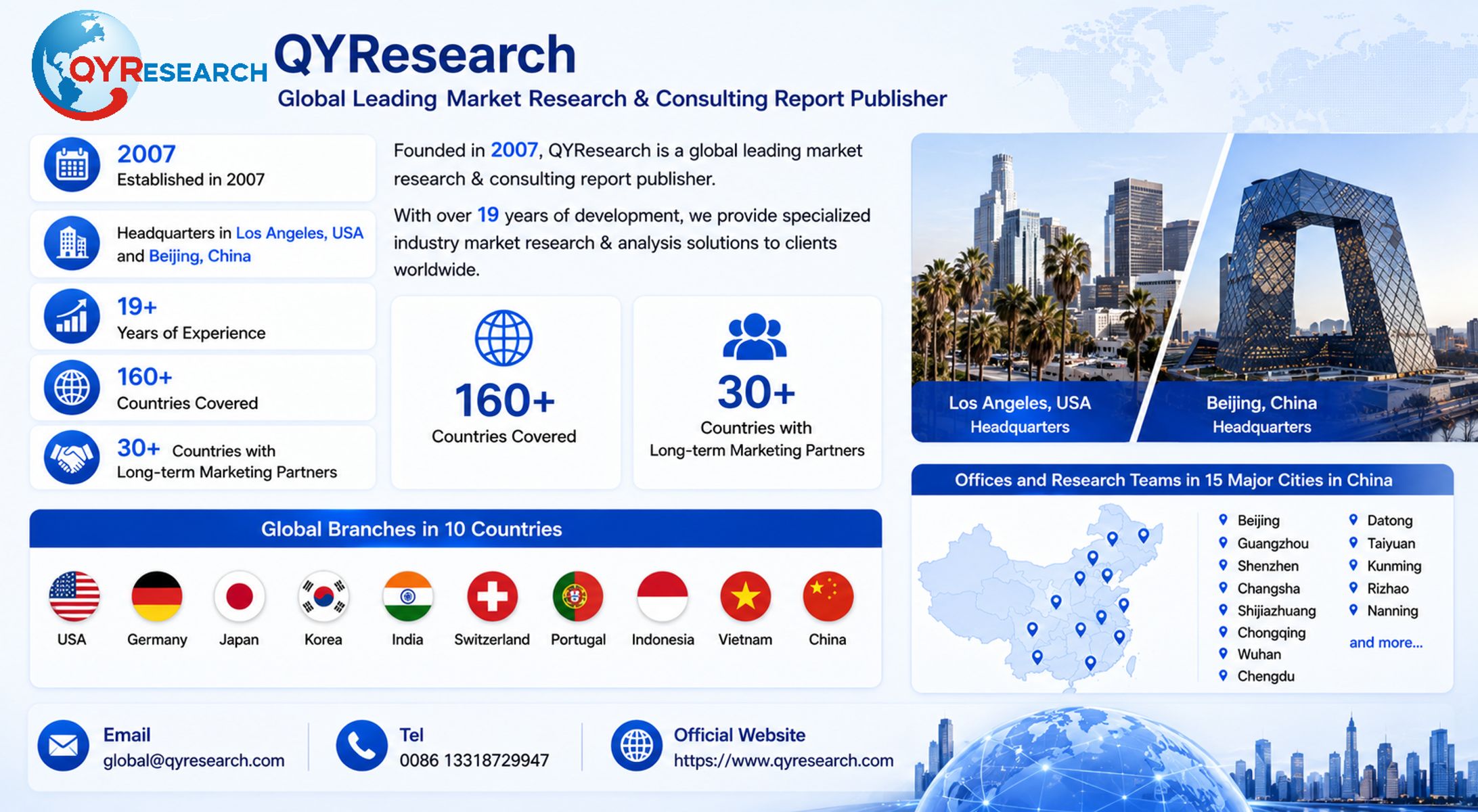
QYResearch founded in California, USA in 2007, which is a leading global market research and consulting company. Our primary business include market research reports, custom reports, commissioned research, IPO consultancy, business plans, etc. With over 19 years of experience and a dedicated research team, we are well placed to provide useful information and data for your business, and we have established offices in 7 countries (include United States, Germany, Switzerland, Japan, Korea, China and India) and business partners in over 30 countries. We have provided industrial information services to more than 60,000 companies in over the world.
Contact Us:
If you have any queries regarding this report or if you would like further information, please contact us:
QY Research Inc.
Add: 17890 Castleton Street Suite 369 City of Industry CA 91748 United States
EN: https://www.qyresearch.com
E-mail: global@qyresearch.com
Tel: 001-626-842-1666(US)
JP: https://www.qyresearch.co.jp
クレジット
イラストレーター


あなたのforiioを無料で作成
Hydrobromic Acid Industry Research: the global market is projected to reach US$2.36 billion by 2032
The global market for Hydrobromic Acid was estimated to be worth US$ 1033 million in 2025 and is projected to reach US$ 2363 million, growing at a CAGR of 2.7% from 2026 to 2032.
Global Market Research Publisher QYResearch (QY Research) announces the release of its latest report “Hydrobromic Acid - Global Market Share and Ranking, Overall Sales and Demand Forecast 2026-2032”. Based on 2025 market situation and impact historical analysis (2021-2025) and forecast calculations (2026-2032), this report provides a comprehensive analysis of the global Hydrobromic Acid market, including market size, market share, market volume, demand, industry development status, and forecasts for the next few years.
The report provides advanced statistics and information on global market conditions and studies the strategic patterns adopted by renowned players across the globe. As the market is constantly changing, the report explores competition, supply and demand trends, as well as the key factors that contribute to its changing demands across many markets.
【Get a free sample PDF of this report (Including Full TOC, List of Tables & Figures, Chart)】
https://www.qyresearch.com/reports/5493113/hydrobromic-acid
Hydrobromic Acid: A Foundational Product in the Bromine Value Chain
Hydrobromic acid is a strong inorganic acid formed by dissolving hydrogen bromide gas in water.
It is usually supplied as a colorless to light-yellow corrosive liquid with a pungent acidic odor.
Beyond Acidity and Bromide Ion Supply
As a basic product in the bromine chemical chain, its value is not defined only by acidity or bromide ion supply.
It is also defined by control of concentration, free bromine, chloride, sulfate, iron, heavy metals, color, and batch consistency.
Position in the Value Chain
It is used in inorganic bromides, organic bromides, pharmaceuticals and intermediates, catalysts and catalyst promoters.
It links upstream bromine resources with downstream fine chemical manufacturing.
Market Size and Growth
The global hydrobromic acid market reached US$1.03 billion in 2025 and is projected to reach US$2.36 billion by 2032, with a CAGR of 2.74% during 2026–2032.
Sales volume is expected to rise from 563.3 K MT to 782.6 K MT over the same period.
A Market Shaped by Stability and Upgrading
Unlike single high-growth specialty materials, the hydrobromic acid market is shaped by stable basic consumption, upgrading demand for higher-quality grades, and recovery from a volatile price cycle.
Pharmaceutical intermediates, agrochemical intermediates, high-purity reagents, electronic chemicals, and PTA oxidation catalyst systems are pushing the industry from ordinary industrial supply toward more segmented, quality-driven service models.
Competitive Structure
The competitive structure includes resource-based global producers, regional bromine chemical suppliers, and Chinese fine chemical participants.
In 2025, ICL-IP ranked first with an 18.23% revenue share, followed by Albemarle, Lixing Technology, Lanxess, and Shouguang Weidong Chemical.
The top five companies together accounted for about 49.57% of global revenue.
Sources of Competitive Advantage
Compared with highly concentrated electronic materials, competitive advantage in hydrobromic acid depends more on bromine resource access, hazardous-chemical compliance, process safety, customer qualification, regional logistics, and downstream bromide integration.
Product Types
By product type, 48% hydrobromic acid remains the mainstream global specification, generating US$815 million in 2025, or about 78.90% of global revenue.
The 62% specification generated US$168 million, accounting for about 16.25%.
48% Specification
The 48% product is widely used in standard industrial synthesis, inorganic bromides, and most fine chemical reactions because it offers good supply stability and operational adaptability.
62% Specification
The 62% product provides higher effective concentration and is used in selected pharmaceutical, agrochemical, flavor and fragrance, and high-end organic synthesis routes.
However, it also requires tighter storage, ventilation, corrosion-resistant equipment, and safety management.
Application Structure
By application, inorganic bromides and organic bromides still form the core consumption base, with 2025 revenue of US$306 million and US$304 million, respectively.
Pharmaceuticals and intermediates generated US$175 million.
Catalysts and catalyst promoters generated US$167 million in 2025.
Pharmaceuticals and Intermediates
Although smaller than the two basic applications, pharmaceuticals and intermediates are expected to grow at a CAGR of 4.35% during 2026–2032, making this the most visible upgrading direction.
Catalysts and Catalyst Promoters
A representative use case is the cobalt-manganese-bromine catalyst system in PTA production.
Here, hydrobromic acid supplies bromide ions to the oxidation catalyst cycle and improves the conversion efficiency and oxidation depth from para-xylene to terephthalic acid.
Regional Landscape
Regionally, Asia Pacific is the largest consuming market, with revenue of US$601 million in 2025 and a global share of 58.13%.
Its revenue is projected to reach US$1.53 billion by 2032, lifting its share to 64.79%.
Asia-Pacific Demand and Production
China, India, Southeast Asia, Japan, and South Korea concentrate pharmaceutical, agrochemical, dye, flame-retardant, electronic material, and base chemical manufacturing.
China is not only an important demand center but also the core production growth region, with output rising from about 240.0 K MT in 2025 to 378.2 K MT in 2032.
Other Regions
North America, Europe, and the Middle East & Africa are smaller in scale but remain important for bromine resources, oilfield chemicals, fine chemicals, and high-value customer qualification.
Future Competition
Over the next several years, competition will shift from pricing of ordinary concentration grades to a broader contest in resource security, quality stability, safety compliance, hazardous-chemical logistics, and high-end customer service.
Winning Capabilities
Suppliers with upstream bromine resources, hydrogen bromide absorption capability, by-product acid recovery, refined analytical systems, and downstream bromide integration will be better positioned to secure long-term orders.
Key end markets include pharmaceuticals, electronic chemicals, high-purity reagents, and catalyst applications.
Strategic Outlook
As China advances high-quality, low-carbon, and supply-chain-secure manufacturing during the 15th Five-Year Plan period, hydrobromic acid will continue to hold foundational and strategic value in the bromine chemical chain.
The report provides a detailed analysis of the market size, growth potential, and key trends for each segment. Through detailed analysis, industry players can identify profit opportunities, develop strategies for specific customer segments, and allocate resources effectively.
The Hydrobromic Acid market is segmented as below:
By Company
ICL-IP
Albemarle
Lanxess
Jordan Bromine
Tosoh
Tata Chemicals
Shandong Haiwang Chemical
Shouguang Weidong Chemical
Shandong Tianyi Chemical
Shandong Tianxin Pharmaceutical Technology
Zhejiang Lixing Technology
Shandong Futong Chemical
Suli
Segment by Type
48% HBr
62% HBr
Others
Segment by Application
Inorganic Bromides
Organic Bromides
Pharmaceuticals and Pharmaceutical Intermediates
Catalysts/Catalysis Promoters
Others
Each chapter of the report provides detailed information for readers to further understand the Hydrobromic Acid market:
Chapter 1: Introduces the report scope of the Hydrobromic Acid report, global total market size (valve, volume and price). This chapter also provides the market dynamics, latest developments of the market, the driving factors and restrictive factors of the market, the challenges and risks faced by manufacturers in the industry, and the analysis of relevant policies in the industry. (2021-2032)
Chapter 2: Detailed analysis of Hydrobromic Acid manufacturers competitive landscape, price, sales and revenue market share, latest development plan, merger, and acquisition information, etc. (2021-2026)
Chapter 3: Provides the analysis of various Hydrobromic Acid market segments by Type, covering the market size and development potential of each market segment, to help readers find the blue ocean market in different market segments. (2021-2032)
Chapter 4: Provides the analysis of various market segments by Application, covering the market size and development potential of each market segment, to help readers find the blue ocean market in different downstream markets.(2021-2032)
Chapter 5: Sales, revenue of Hydrobromic Acid in regional level. It provides a quantitative analysis of the market size and development potential of each region and introduces the market development, future development prospects, market space, and market size of each country in the world..(2021-2032)
Chapter 6: Sales, revenue of Hydrobromic Acid in country level. It provides sigmate data by Type, and by Application for each country/region.(2021-2032)
Chapter 7: Provides profiles of key players, introducing the basic situation of the main companies in the market in detail, including product sales, revenue, price, gross margin, product introduction, recent development, etc. (2021-2026)
Chapter 8: Analysis of industrial chain, including the upstream and downstream of the industry.
Chapter 9: Conclusion.
Benefits of purchasing QYResearch report:
Competitive Analysis: QYResearch provides in-depth Hydrobromic Acid competitive analysis, including information on key company profiles, new entrants, acquisitions, mergers, large market shear, opportunities, and challenges. These analyses provide clients with a comprehensive understanding of market conditions and competitive dynamics, enabling them to develop effective market strategies and maintain their competitive edge.
Industry Analysis: QYResearch provides Hydrobromic Acid comprehensive industry data and trend analysis, including raw material analysis, market application analysis, product type analysis, market demand analysis, market supply analysis, downstream market analysis, and supply chain analysis.
and trend analysis. These analyses help clients understand the direction of industry development and make informed business decisions.
Market Size: QYResearch provides Hydrobromic Acid market size analysis, including capacity, production, sales, production value, price, cost, and profit analysis. This data helps clients understand market size and development potential, and is an important reference for business development.
Other relevant reports of QYResearch:
Global Hydrobromic Acid Market Outlook, In‑Depth Analysis & Forecast to 2032
Global Hydrobromic Acid Sales Market Report, Competitive Analysis and Regional Opportunities 2026-2032
Global Hydrobromic Acid Market Research Report 2026
To contact us and get this report: https://www.qyresearch.com/contact-us
About Us:
QYResearch founded in California, USA in 2007, which is a leading global market research and consulting company. Our primary business include market research reports, custom reports, commissioned research, IPO consultancy, business plans, etc. With over 19 years of experience and a dedicated research team, we are well placed to provide useful information and data for your business, and we have established offices in 7 countries (include United States, Germany, Switzerland, Japan, Korea, China and India) and business partners in over 30 countries. We have provided industrial information services to more than 60,000 companies in over the world.
Contact Us:
If you have any queries regarding this report or if you would like further information, please contact us:
QY Research Inc.
Add: 17890 Castleton Street Suite 369 City of Industry CA 91748 United States
EN: https://www.qyresearch.com
E-mail: global@qyresearch.com
Tel: 001-626-842-1666(US)
JP: https://www.qyresearch.co.jp
クレジット
イラストレーター