
Pure Wafer Foundry Market Research: representing a CAGR of about 9.23% during 2026–2032
クレジット

イラストレーター
Pure Wafer Foundry Market Research: representing a CAGR of about 9.23% during 2026–2032
1 Global Pure Wafer Foundry Market Research Report
2 Pure wafer foundry refers to a semiconductor manufacturing model in which independent foundries provide wafer fabrication services for external customers. These foundries receive design data from IC design houses, system companies, platform chip developers and selected IDM customers, and manufacture wafers through advanced logic, mature logic, mixed-signal, high-voltage, BCD, embedded non-volatile memory, RFSOI, CMOS image sensor, power and other specialty process platforms. Core capabilities include process platform development, PDK and design-rule support, mask and pilot-run introduction, yield ramp-up, capacity delivery, quality systems and long-term customer engineering collaboration.
3 This report covers service definition, technology roadmap, market size, competitive landscape, application demand, regional structure and supply-chain evolution. It focuses on demand changes, technology migration and supply-chain opportunities for pure wafer foundry services across AI/HPC, smartphones, automotive electronics, industrial control, IoT, RF communications, power devices and display driver ICs.
4 In the semiconductor value chain, pure wafer foundry separates chip design from wafer manufacturing, lowers capital barriers for fabless companies, and improves time-to-market through manufacturing scale, reusable process platforms and ecosystem collaboration. Major applications include AI accelerators, CPUs/GPUs, smartphone SoCs, connectivity ICs, automotive MCUs and analog ICs, power management, display drivers, sensors, industrial and IoT chips. Driven by AI computing platforms, advanced process nodes, chiplet architectures, automotive electronics and regionalized supply-chain build-out, pure wafer foundry has become a core infrastructure layer in global semiconductor manufacturing.
5 The global pure wafer foundry market size was approximately US$175.0 billion in 2025 and is expected to reach approximately US$335.0 billion by 2032, representing a CAGR of about 9.23% during 2026–2032. The scope mainly covers revenue from independent foundries whose core business is external-customer wafer manufacturing services, including 12-inch and 8-inch wafer fabrication, advanced logic, mature logic, mixed-signal, RF, high-voltage, embedded memory, BCD, power and specialty process services.
6 On the demand side, growth is driven by AI/HPC chip volume expansion, higher wafer value at advanced nodes, AI upgrades in smartphones and PCs, platformization of automotive and industrial chips, localization of mature-node capacity and supply-chain restructuring. On the supply side, leading foundries are investing in 2nm and below, 3nm/5nm capacity, advanced-packaging collaboration, 28nm/40nm specialty platforms, automotive-grade quality systems and regional capacity in the United States, Japan, Europe and Southeast Asia. Overall, the industry is entering a phase in which capital-intensive advanced-node expansion and structural upgrades of mature specialty processes coexist. Future incremental demand will mainly come from AI compute chips, advanced networking and optical communication ICs, automotive electronics, industrial control, high-voltage/BCD/RF platforms and localized supply-chain demand in mainland China and other regional markets. Global semiconductor sales reached US$791.7 billion in 2025, up 25.6% year over year, with logic and memory products showing the strongest growth; this demand backdrop reinforces the long-term strategic value of foundry capacity in AI computing, advanced logic and specialty process platforms.
7 Competitive Landscape
8 The global pure wafer foundry industry shows a clear structure of high concentration at the top and platform differentiation across specialty segments. The first tier is led by TSMC, whose strengths lie in advanced logic nodes, customer ecosystem, yield ramp-up, advanced-packaging coordination and global capacity deployment, making it the most important external manufacturing platform for AI/HPC, smartphones and high-performance computing chips. The second tier includes UMC, GlobalFoundries and SMIC, competing mainly in mature logic, specialty processes, automotive, industrial, RF, high-voltage, embedded memory, BCD and regional supply-chain security.
9 Regional and specialty players include Hua Hong Semiconductor, Vanguard International Semiconductor, Powerchip Semiconductor Manufacturing, Tower Semiconductor, DB HiTek, X-FAB and Nexchip, which typically differentiate themselves in analog, power, high-voltage, display driver, CIS, RF-SOI, SiGe, embedded memory and selected regional customer groups. Future competition will shift from capacity expansion alone to an integrated contest of node capability, platform completeness, customer stickiness, cost efficiency and geopolitical supply security. Advanced nodes will remain concentrated among a small number of leaders, while mature specialty processes will become more regionalized across mainland China, Southeast Asia, Japan, Europe and the United States.
10 Market Classification
11 One of the most stable classification dimensions for pure wafer foundry is process node and platform, which can be divided into advanced logic foundry and mature/specialty foundry. Advanced logic foundry mainly serves AI accelerators, GPUs, CPUs, smartphone SoCs, high-end networking ICs and advanced ASICs, with competition centered on EUV capability, transistor architecture migration, yield management, design ecosystem and advanced-packaging interfaces. Mature and specialty foundry mainly serves automotive MCUs, analog ICs, power management, display drivers, CIS, RF, industrial control, IoT and consumer electronics, with competition centered on platform stability, cost control, long-life supply, automotive qualification, device models and application-specific customization.
12 Another common dimension is end application: AI/HPC and premium smart devices drive demand for advanced nodes, while automotive electronics, industrial control, power management, RF front-end and display drivers drive demand for mature and specialty processes. Faster-growing areas include AI servers and networking ICs, advanced-node ASICs, automotive-grade high-reliability chips, high-voltage/BCD platforms, RF-SOI, SiGe and mature-node platforms serving localized supply chains.
13 Regional Structure
14 On the production side, China Taiwan remains the core global manufacturing base for both advanced and mature pure foundry capacity, supported by TSMC, UMC, Vanguard and PSMC. Mainland China continues to expand in mature logic, specialty processes, display drivers, power, MCUs and domestic customer demand, with SMIC, Hua Hong and Nexchip gaining importance in regional supply chains. New capacity in the United States, Japan and Europe is mainly driven by advanced nodes, local supply-chain security, automotive electronics and critical infrastructure demand. Singapore, Israel, Germany and Malaysia remain important in specialty processes, analog, RF, automotive and industrial chip manufacturing.
15 On the consumption side, North American fabless and cloud/AI platform companies are the most important demand source for advanced nodes; mainland Chinese customers drive mature-node and localized supply-chain demand; Europe and Japan contribute demand from automotive, industrial, power, analog and sensor applications; Korea and China Taiwan benefit from system companies, IC design, packaging and electronics manufacturing ecosystems. Worldwide 300mm fab equipment spending is expected to reach US$133 billion in 2026 and US$151 billion in 2027, reflecting a new investment cycle driven by AI demand and regional semiconductor self-sufficiency.
16 Value Chain Analysis
17 The upstream supply chain for pure wafer foundry includes silicon wafers, photoresists, electronic gases, wet electronic chemicals, CMP materials, sputtering targets, photomasks, wafer fabrication equipment, EDA, IP and design services. EUV lithography, deposition, etching, metrology and inspection, advanced materials and high-purity supply chains have a significant impact on advanced-node yield and cost. The midstream layer consists of foundry manufacturing platforms, including process R&D, pilot production, mask management, wafer fabrication, yield enhancement, reliability verification, automotive and quality systems, capacity scheduling and customer engineering support. Downstream customers include fabless IC design companies, platform system companies, automotive and industrial chip suppliers, communications and consumer electronics customers, and IDMs using external capacity.
18 Key barriers include capital intensity, advanced process R&D, yield databases, customer qualification cycles, design ecosystem, equipment/material supply chain, engineering talent and global compliance systems. Value is concentrated in advanced-node wafer fabrication, specialty platforms, automotive-qualified capacity, long-term capacity agreements and advanced-packaging collaboration. Future supply-chain changes will feature stronger concentration in advanced nodes, more regionalized mature/specialty capacity, shorter localization validation cycles for key equipment and materials, and deeper collaboration among foundries, advanced packaging, IP, EDA and system customers.
19 Industry Environment and Outlook
20 From a policy and industry-environment perspective, semiconductor manufacturing has become a priority area for technology security, manufacturing reshoring and supply-chain resilience across major economies. The United States, Europe, Japan, Korea, mainland China and China Taiwan are increasing support for wafer manufacturing, advanced packaging, local equipment and materials, and talent development. Major barriers include massive R&D spending for advanced nodes, access constraints for EUV and other critical equipment, long yield ramp-up cycles, strict customer qualification and automotive-grade certification, rising environmental and energy requirements, and increasing uncertainty around trade and export controls. At the same time, mature-node capacity still faces pricing pressure in some cyclical phases, while automotive and industrial demand recovery, consumer-electronics inventory swings, customer multi-sourcing strategies and geopolitical risks can affect utilization and profitability.
21 In the next few years, the key growth drivers for pure wafer foundry will be AI computing infrastructure, advanced-node ASICs and GPUs, edge AI, automotive intelligence and electrification, industrial digitalization, 5G/6G communications, IoT and regional supply-chain restructuring. Technology upgrades will focus on volume production at 2nm and below, GAA/nanosheet transistors, backside power delivery, EUV process-window optimization, coordination between wafer manufacturing and advanced packaging, platformization of mature nodes and deeper automotive specialty process capabilities.
22 In terms of competitive dynamics, advanced nodes will further reinforce the advantages of leading foundries, while mature specialty processes will develop into a multi-center competitive structure based on cost, customer proximity, qualification capability and regional supply security. Overall, the pure wafer foundry industry retains a solid long-term growth foundation, but market segmentation will become more pronounced, requiring leading companies to combine technology iteration, capacity investment, customer binding, quality systems and global operations.
The report provides a detailed analysis of the market size, growth potential, and key trends for each segment. Through detailed analysis, industry players can identify profit opportunities, develop strategies for specific customer segments, and allocate resources effectively.
Each chapter of the report provides detailed information for readers to further understand the Pure Wafer Foundry market:
Chapter 1: Introduces the report scope of the Pure Wafer Foundry report, global total market size (valve, volume and price). This chapter also provides the market dynamics, latest developments of the market, the driving factors and restrictive factors of the market, the challenges and risks faced by manufacturers in the industry, and the analysis of relevant policies in the industry. (2021-2032)
Chapter 2: Detailed analysis of Pure Wafer Foundry manufacturers competitive landscape, price, sales and revenue market share, latest development plan, merger, and acquisition information, etc. (2021-2026)
Chapter 3: Provides the analysis of various Pure Wafer Foundry market segments by Type, covering the market size and development potential of each market segment, to help readers find the blue ocean market in different market segments. (2021-2032)
Chapter 4: Provides the analysis of various market segments by Application, covering the market size and development potential of each market segment, to help readers find the blue ocean market in different downstream markets.(2021-2032)
Chapter 5: Sales, revenue of Pure Wafer Foundry in regional level. It provides a quantitative analysis of the market size and development potential of each region and introduces the market development, future development prospects, market space, and market size of each country in the world..(2021-2032)
Chapter 6: Sales, revenue of Pure Wafer Foundry in country level. It provides sigmate data by Type, and by Application for each country/region.(2021-2032)
Chapter 7: Provides profiles of key players, introducing the basic situation of the main companies in the market in detail, including product sales, revenue, price, gross margin, product introduction, recent development, etc. (2021-2026)
Chapter 8: Analysis of industrial chain, including the upstream and downstream of the industry.
Chapter 9: Conclusion.
Benefits of purchasing QYResearch report:
Competitive Analysis: QYResearch provides in-depth Pure Wafer Foundry competitive analysis, including information on key company profiles, new entrants, acquisitions, mergers, large market shear, opportunities, and challenges. These analyses provide clients with a comprehensive understanding of market conditions and competitive dynamics, enabling them to develop effective market strategies and maintain their competitive edge.
Industry Analysis: QYResearch provides Pure Wafer Foundry comprehensive industry data and trend analysis, including raw material analysis, market application analysis, product type analysis, market demand analysis, market supply analysis, downstream market analysis, and supply chain analysis.
and trend analysis. These analyses help clients understand the direction of industry development and make informed business decisions.
Market Size: QYResearch provides Pure Wafer Foundry market size analysis, including capacity, production, sales, production value, price, cost, and profit analysis. This data helps clients understand market size and development potential, and is an important reference for business development.
To contact us and get this report: https://www.qyresearch.com/contact-us
About Us:
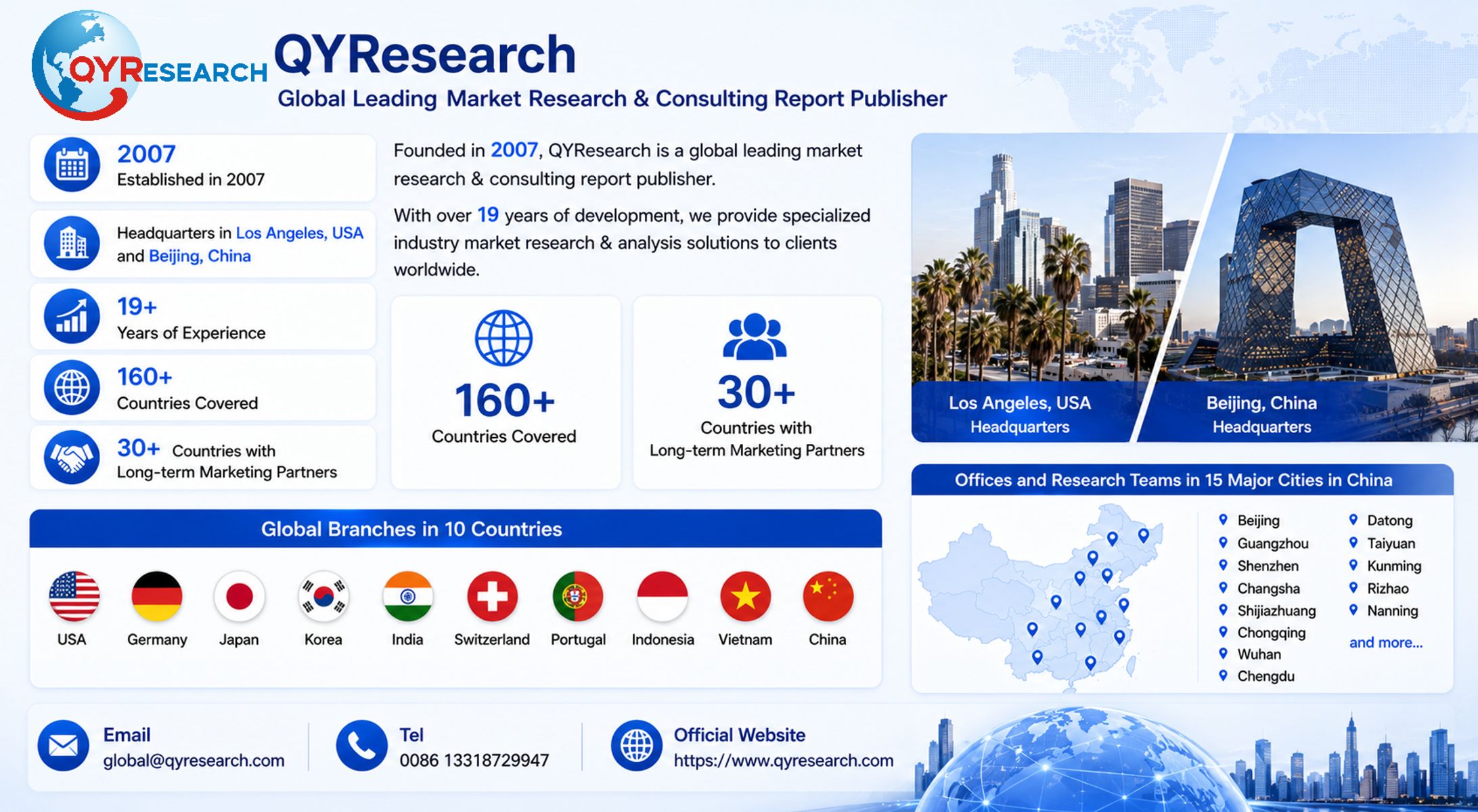
QYResearch founded in California, USA in 2007, which is a leading global market research and consulting company. Our primary business include market research reports, custom reports, commissioned research, IPO consultancy, business plans, etc. With over 19 years of experience and a dedicated research team, we are well placed to provide useful information and data for your business, and we have established offices in 7 countries (include United States, Germany, Switzerland, Japan, Korea, China and India) and business partners in over 30 countries. We have provided industrial information services to more than 60,000 companies in over the world.
Contact Us:
If you have any queries regarding this report or if you would like further information, please contact us:
QY Research Inc.
Add: 17890 Castleton Street Suite 369 City of Industry CA 91748 United States
EN: https://www.qyresearch.com
E-mail: global@qyresearch.com
Tel: 001-626-842-1666(US)
JP: https://www.qyresearch.co.jp
クレジット
イラストレーター


あなたのforiioを無料で作成
Pure Wafer Foundry Market Research: representing a CAGR of about 9.23% during 2026–2032
1 Global Pure Wafer Foundry Market Research Report
2 Pure wafer foundry refers to a semiconductor manufacturing model in which independent foundries provide wafer fabrication services for external customers. These foundries receive design data from IC design houses, system companies, platform chip developers and selected IDM customers, and manufacture wafers through advanced logic, mature logic, mixed-signal, high-voltage, BCD, embedded non-volatile memory, RFSOI, CMOS image sensor, power and other specialty process platforms. Core capabilities include process platform development, PDK and design-rule support, mask and pilot-run introduction, yield ramp-up, capacity delivery, quality systems and long-term customer engineering collaboration.
3 This report covers service definition, technology roadmap, market size, competitive landscape, application demand, regional structure and supply-chain evolution. It focuses on demand changes, technology migration and supply-chain opportunities for pure wafer foundry services across AI/HPC, smartphones, automotive electronics, industrial control, IoT, RF communications, power devices and display driver ICs.
4 In the semiconductor value chain, pure wafer foundry separates chip design from wafer manufacturing, lowers capital barriers for fabless companies, and improves time-to-market through manufacturing scale, reusable process platforms and ecosystem collaboration. Major applications include AI accelerators, CPUs/GPUs, smartphone SoCs, connectivity ICs, automotive MCUs and analog ICs, power management, display drivers, sensors, industrial and IoT chips. Driven by AI computing platforms, advanced process nodes, chiplet architectures, automotive electronics and regionalized supply-chain build-out, pure wafer foundry has become a core infrastructure layer in global semiconductor manufacturing.
5 The global pure wafer foundry market size was approximately US$175.0 billion in 2025 and is expected to reach approximately US$335.0 billion by 2032, representing a CAGR of about 9.23% during 2026–2032. The scope mainly covers revenue from independent foundries whose core business is external-customer wafer manufacturing services, including 12-inch and 8-inch wafer fabrication, advanced logic, mature logic, mixed-signal, RF, high-voltage, embedded memory, BCD, power and specialty process services.
6 On the demand side, growth is driven by AI/HPC chip volume expansion, higher wafer value at advanced nodes, AI upgrades in smartphones and PCs, platformization of automotive and industrial chips, localization of mature-node capacity and supply-chain restructuring. On the supply side, leading foundries are investing in 2nm and below, 3nm/5nm capacity, advanced-packaging collaboration, 28nm/40nm specialty platforms, automotive-grade quality systems and regional capacity in the United States, Japan, Europe and Southeast Asia. Overall, the industry is entering a phase in which capital-intensive advanced-node expansion and structural upgrades of mature specialty processes coexist. Future incremental demand will mainly come from AI compute chips, advanced networking and optical communication ICs, automotive electronics, industrial control, high-voltage/BCD/RF platforms and localized supply-chain demand in mainland China and other regional markets. Global semiconductor sales reached US$791.7 billion in 2025, up 25.6% year over year, with logic and memory products showing the strongest growth; this demand backdrop reinforces the long-term strategic value of foundry capacity in AI computing, advanced logic and specialty process platforms.
7 Competitive Landscape
8 The global pure wafer foundry industry shows a clear structure of high concentration at the top and platform differentiation across specialty segments. The first tier is led by TSMC, whose strengths lie in advanced logic nodes, customer ecosystem, yield ramp-up, advanced-packaging coordination and global capacity deployment, making it the most important external manufacturing platform for AI/HPC, smartphones and high-performance computing chips. The second tier includes UMC, GlobalFoundries and SMIC, competing mainly in mature logic, specialty processes, automotive, industrial, RF, high-voltage, embedded memory, BCD and regional supply-chain security.
9 Regional and specialty players include Hua Hong Semiconductor, Vanguard International Semiconductor, Powerchip Semiconductor Manufacturing, Tower Semiconductor, DB HiTek, X-FAB and Nexchip, which typically differentiate themselves in analog, power, high-voltage, display driver, CIS, RF-SOI, SiGe, embedded memory and selected regional customer groups. Future competition will shift from capacity expansion alone to an integrated contest of node capability, platform completeness, customer stickiness, cost efficiency and geopolitical supply security. Advanced nodes will remain concentrated among a small number of leaders, while mature specialty processes will become more regionalized across mainland China, Southeast Asia, Japan, Europe and the United States.
10 Market Classification
11 One of the most stable classification dimensions for pure wafer foundry is process node and platform, which can be divided into advanced logic foundry and mature/specialty foundry. Advanced logic foundry mainly serves AI accelerators, GPUs, CPUs, smartphone SoCs, high-end networking ICs and advanced ASICs, with competition centered on EUV capability, transistor architecture migration, yield management, design ecosystem and advanced-packaging interfaces. Mature and specialty foundry mainly serves automotive MCUs, analog ICs, power management, display drivers, CIS, RF, industrial control, IoT and consumer electronics, with competition centered on platform stability, cost control, long-life supply, automotive qualification, device models and application-specific customization.
12 Another common dimension is end application: AI/HPC and premium smart devices drive demand for advanced nodes, while automotive electronics, industrial control, power management, RF front-end and display drivers drive demand for mature and specialty processes. Faster-growing areas include AI servers and networking ICs, advanced-node ASICs, automotive-grade high-reliability chips, high-voltage/BCD platforms, RF-SOI, SiGe and mature-node platforms serving localized supply chains.
13 Regional Structure
14 On the production side, China Taiwan remains the core global manufacturing base for both advanced and mature pure foundry capacity, supported by TSMC, UMC, Vanguard and PSMC. Mainland China continues to expand in mature logic, specialty processes, display drivers, power, MCUs and domestic customer demand, with SMIC, Hua Hong and Nexchip gaining importance in regional supply chains. New capacity in the United States, Japan and Europe is mainly driven by advanced nodes, local supply-chain security, automotive electronics and critical infrastructure demand. Singapore, Israel, Germany and Malaysia remain important in specialty processes, analog, RF, automotive and industrial chip manufacturing.
15 On the consumption side, North American fabless and cloud/AI platform companies are the most important demand source for advanced nodes; mainland Chinese customers drive mature-node and localized supply-chain demand; Europe and Japan contribute demand from automotive, industrial, power, analog and sensor applications; Korea and China Taiwan benefit from system companies, IC design, packaging and electronics manufacturing ecosystems. Worldwide 300mm fab equipment spending is expected to reach US$133 billion in 2026 and US$151 billion in 2027, reflecting a new investment cycle driven by AI demand and regional semiconductor self-sufficiency.
16 Value Chain Analysis
17 The upstream supply chain for pure wafer foundry includes silicon wafers, photoresists, electronic gases, wet electronic chemicals, CMP materials, sputtering targets, photomasks, wafer fabrication equipment, EDA, IP and design services. EUV lithography, deposition, etching, metrology and inspection, advanced materials and high-purity supply chains have a significant impact on advanced-node yield and cost. The midstream layer consists of foundry manufacturing platforms, including process R&D, pilot production, mask management, wafer fabrication, yield enhancement, reliability verification, automotive and quality systems, capacity scheduling and customer engineering support. Downstream customers include fabless IC design companies, platform system companies, automotive and industrial chip suppliers, communications and consumer electronics customers, and IDMs using external capacity.
18 Key barriers include capital intensity, advanced process R&D, yield databases, customer qualification cycles, design ecosystem, equipment/material supply chain, engineering talent and global compliance systems. Value is concentrated in advanced-node wafer fabrication, specialty platforms, automotive-qualified capacity, long-term capacity agreements and advanced-packaging collaboration. Future supply-chain changes will feature stronger concentration in advanced nodes, more regionalized mature/specialty capacity, shorter localization validation cycles for key equipment and materials, and deeper collaboration among foundries, advanced packaging, IP, EDA and system customers.
19 Industry Environment and Outlook
20 From a policy and industry-environment perspective, semiconductor manufacturing has become a priority area for technology security, manufacturing reshoring and supply-chain resilience across major economies. The United States, Europe, Japan, Korea, mainland China and China Taiwan are increasing support for wafer manufacturing, advanced packaging, local equipment and materials, and talent development. Major barriers include massive R&D spending for advanced nodes, access constraints for EUV and other critical equipment, long yield ramp-up cycles, strict customer qualification and automotive-grade certification, rising environmental and energy requirements, and increasing uncertainty around trade and export controls. At the same time, mature-node capacity still faces pricing pressure in some cyclical phases, while automotive and industrial demand recovery, consumer-electronics inventory swings, customer multi-sourcing strategies and geopolitical risks can affect utilization and profitability.
21 In the next few years, the key growth drivers for pure wafer foundry will be AI computing infrastructure, advanced-node ASICs and GPUs, edge AI, automotive intelligence and electrification, industrial digitalization, 5G/6G communications, IoT and regional supply-chain restructuring. Technology upgrades will focus on volume production at 2nm and below, GAA/nanosheet transistors, backside power delivery, EUV process-window optimization, coordination between wafer manufacturing and advanced packaging, platformization of mature nodes and deeper automotive specialty process capabilities.
22 In terms of competitive dynamics, advanced nodes will further reinforce the advantages of leading foundries, while mature specialty processes will develop into a multi-center competitive structure based on cost, customer proximity, qualification capability and regional supply security. Overall, the pure wafer foundry industry retains a solid long-term growth foundation, but market segmentation will become more pronounced, requiring leading companies to combine technology iteration, capacity investment, customer binding, quality systems and global operations.
The report provides a detailed analysis of the market size, growth potential, and key trends for each segment. Through detailed analysis, industry players can identify profit opportunities, develop strategies for specific customer segments, and allocate resources effectively.
Each chapter of the report provides detailed information for readers to further understand the Pure Wafer Foundry market:
Chapter 1: Introduces the report scope of the Pure Wafer Foundry report, global total market size (valve, volume and price). This chapter also provides the market dynamics, latest developments of the market, the driving factors and restrictive factors of the market, the challenges and risks faced by manufacturers in the industry, and the analysis of relevant policies in the industry. (2021-2032)
Chapter 2: Detailed analysis of Pure Wafer Foundry manufacturers competitive landscape, price, sales and revenue market share, latest development plan, merger, and acquisition information, etc. (2021-2026)
Chapter 3: Provides the analysis of various Pure Wafer Foundry market segments by Type, covering the market size and development potential of each market segment, to help readers find the blue ocean market in different market segments. (2021-2032)
Chapter 4: Provides the analysis of various market segments by Application, covering the market size and development potential of each market segment, to help readers find the blue ocean market in different downstream markets.(2021-2032)
Chapter 5: Sales, revenue of Pure Wafer Foundry in regional level. It provides a quantitative analysis of the market size and development potential of each region and introduces the market development, future development prospects, market space, and market size of each country in the world..(2021-2032)
Chapter 6: Sales, revenue of Pure Wafer Foundry in country level. It provides sigmate data by Type, and by Application for each country/region.(2021-2032)
Chapter 7: Provides profiles of key players, introducing the basic situation of the main companies in the market in detail, including product sales, revenue, price, gross margin, product introduction, recent development, etc. (2021-2026)
Chapter 8: Analysis of industrial chain, including the upstream and downstream of the industry.
Chapter 9: Conclusion.
Benefits of purchasing QYResearch report:
Competitive Analysis: QYResearch provides in-depth Pure Wafer Foundry competitive analysis, including information on key company profiles, new entrants, acquisitions, mergers, large market shear, opportunities, and challenges. These analyses provide clients with a comprehensive understanding of market conditions and competitive dynamics, enabling them to develop effective market strategies and maintain their competitive edge.
Industry Analysis: QYResearch provides Pure Wafer Foundry comprehensive industry data and trend analysis, including raw material analysis, market application analysis, product type analysis, market demand analysis, market supply analysis, downstream market analysis, and supply chain analysis.
and trend analysis. These analyses help clients understand the direction of industry development and make informed business decisions.
Market Size: QYResearch provides Pure Wafer Foundry market size analysis, including capacity, production, sales, production value, price, cost, and profit analysis. This data helps clients understand market size and development potential, and is an important reference for business development.
To contact us and get this report: https://www.qyresearch.com/contact-us
About Us:
QYResearch founded in California, USA in 2007, which is a leading global market research and consulting company. Our primary business include market research reports, custom reports, commissioned research, IPO consultancy, business plans, etc. With over 19 years of experience and a dedicated research team, we are well placed to provide useful information and data for your business, and we have established offices in 7 countries (include United States, Germany, Switzerland, Japan, Korea, China and India) and business partners in over 30 countries. We have provided industrial information services to more than 60,000 companies in over the world.
Contact Us:
If you have any queries regarding this report or if you would like further information, please contact us:
QY Research Inc.
Add: 17890 Castleton Street Suite 369 City of Industry CA 91748 United States
EN: https://www.qyresearch.com
E-mail: global@qyresearch.com
Tel: 001-626-842-1666(US)
JP: https://www.qyresearch.co.jp
クレジット
イラストレーター