
The Quiet Return of Neon: Light as Expression, Not Just Display
クレジット

Researcher
Blogger
Interviewer
Editor
Planning
Writer
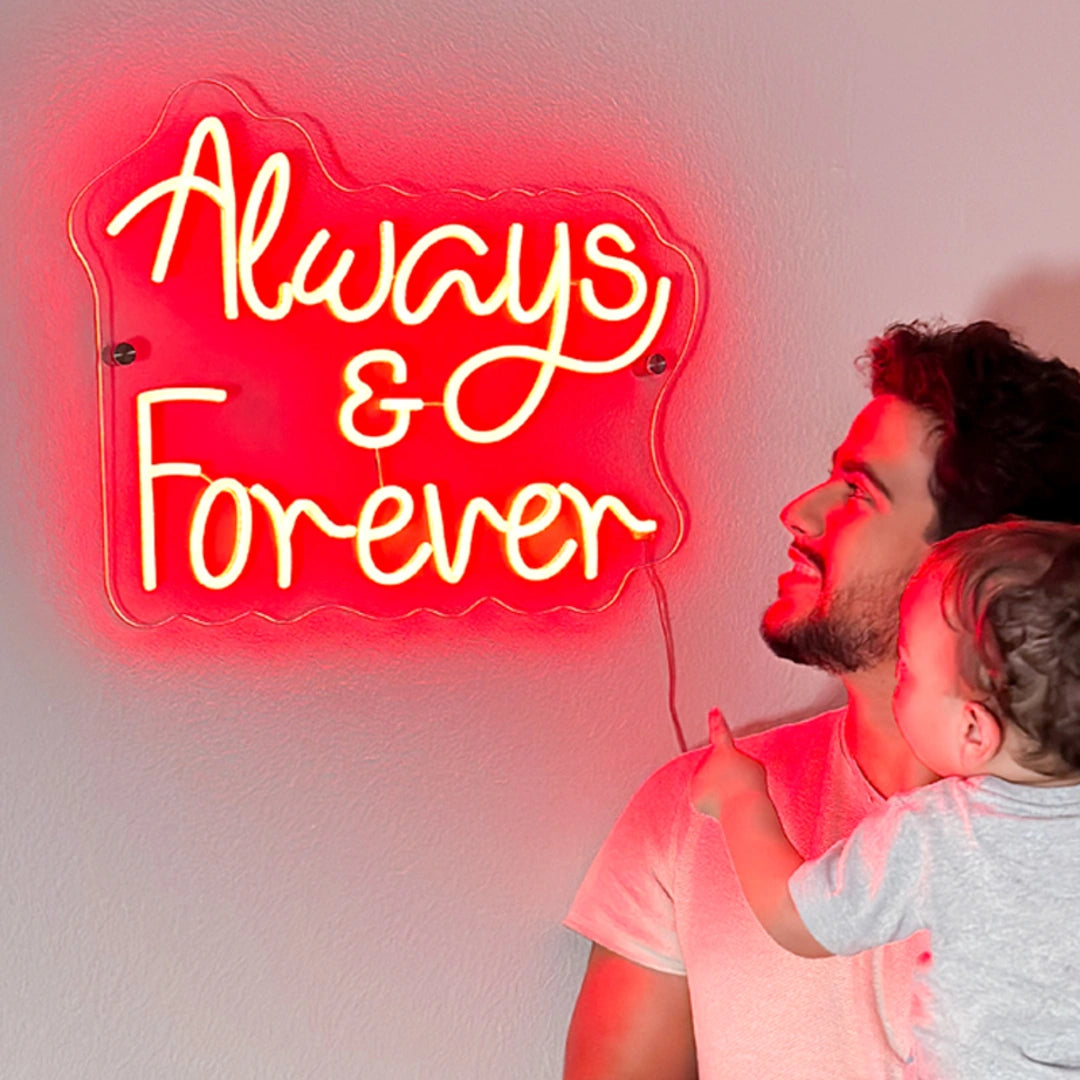
The Quiet Return of Neon: Light as Expression, Not Just Display
How custom neon signs are finding a new place in everyday spaces through subtlety, memory, and personal meaning
There was a time when neon belonged mostly to the outside world.
It lived in shop windows, on city streets, above doorways that stayed open late into the night. It was bright, direct, and meant to be seen from a distance. Neon was never subtle. It announced itself.
But step into homes today, and you begin to notice something different.
The light is still there, but it has softened. It no longer demands attention in the same way. Instead, it settles into the background, becoming part of the atmosphere rather than the focal point.
This is where the idea of a custom neon sign has quietly shifted.
It is no longer just about visibility. It is about presence.
In many spaces, lighting has moved away from being purely functional. It is not only about brightness or clarity. It is about how a room feels at certain moments, especially in the evening, when everything slows down and the details begin to matter more.
A custom neon sign fits into this change in a natural way.
It carries a certain familiarity, a connection to the past, but it exists in a form that feels more adaptable to everyday living. The glow is often softer now, less intense, more in tune with spaces that are designed for rest rather than attention.
This balance makes it easier to live with.
In one home, I noticed how a simple phrase in light had become part of the room without taking over it. During the day, it was almost invisible. Just another object on the wall. But at night, it added a quiet layer that changed the entire atmosphere.
It did not define the space.
It completed it.
That is often how meaningful objects work. They do not stand apart from their surroundings. They become part of them over time, shaping how a space is experienced rather than how it is seen at first glance.
The idea of customization also plays a role here, though not in an obvious way.
It is less about creating something unique for the sake of it, and more about choosing something that already feels personal. A word, a shape, a simple line of light that reflects a certain mood or memory. Something that belongs, even if it is newly added.
In that sense, a custom neon sign becomes less about design and more about identity.
It reflects how people are thinking about their spaces now. Not as finished environments, but as places that evolve. Where objects are added slowly, and only when they feel right.
Even in more minimal settings, this kind of light finds a place.
A room with very few elements can feel complete with just one addition that carries meaning. A soft glow on a wall, a detail that becomes noticeable over time rather than immediately.
In more layered spaces, the same light blends differently. It becomes one of many elements, contributing to a larger atmosphere without standing out on its own.
This adaptability is what makes it relevant now.
It does not belong to a single style. It moves between them, adjusting to the pace and feeling of the space it is part of.
In the end, the return of neon is not about bringing back something bold.
It is about reinterpreting it in a quieter way.
A custom neon sign, when placed thoughtfully, does not try to be seen first. It waits. It settles. And over time, it becomes one of those details that feels as though it has always been there, even if it has not.
クレジット
Researcher
Blogger
Interviewer
Editor
Planning
Writer
あなたのforiioを無料で作成
The Quiet Return of Neon: Light as Expression, Not Just Display
How custom neon signs are finding a new place in everyday spaces through subtlety, memory, and personal meaning
There was a time when neon belonged mostly to the outside world.
It lived in shop windows, on city streets, above doorways that stayed open late into the night. It was bright, direct, and meant to be seen from a distance. Neon was never subtle. It announced itself.
But step into homes today, and you begin to notice something different.
The light is still there, but it has softened. It no longer demands attention in the same way. Instead, it settles into the background, becoming part of the atmosphere rather than the focal point.
This is where the idea of a custom neon sign has quietly shifted.
It is no longer just about visibility. It is about presence.
In many spaces, lighting has moved away from being purely functional. It is not only about brightness or clarity. It is about how a room feels at certain moments, especially in the evening, when everything slows down and the details begin to matter more.
A custom neon sign fits into this change in a natural way.
It carries a certain familiarity, a connection to the past, but it exists in a form that feels more adaptable to everyday living. The glow is often softer now, less intense, more in tune with spaces that are designed for rest rather than attention.
This balance makes it easier to live with.
In one home, I noticed how a simple phrase in light had become part of the room without taking over it. During the day, it was almost invisible. Just another object on the wall. But at night, it added a quiet layer that changed the entire atmosphere.
It did not define the space.
It completed it.
That is often how meaningful objects work. They do not stand apart from their surroundings. They become part of them over time, shaping how a space is experienced rather than how it is seen at first glance.
The idea of customization also plays a role here, though not in an obvious way.
It is less about creating something unique for the sake of it, and more about choosing something that already feels personal. A word, a shape, a simple line of light that reflects a certain mood or memory. Something that belongs, even if it is newly added.
In that sense, a custom neon sign becomes less about design and more about identity.
It reflects how people are thinking about their spaces now. Not as finished environments, but as places that evolve. Where objects are added slowly, and only when they feel right.
Even in more minimal settings, this kind of light finds a place.
A room with very few elements can feel complete with just one addition that carries meaning. A soft glow on a wall, a detail that becomes noticeable over time rather than immediately.
In more layered spaces, the same light blends differently. It becomes one of many elements, contributing to a larger atmosphere without standing out on its own.
This adaptability is what makes it relevant now.
It does not belong to a single style. It moves between them, adjusting to the pace and feeling of the space it is part of.
In the end, the return of neon is not about bringing back something bold.
It is about reinterpreting it in a quieter way.
A custom neon sign, when placed thoughtfully, does not try to be seen first. It waits. It settles. And over time, it becomes one of those details that feels as though it has always been there, even if it has not.
クレジット
Researcher
Blogger
Interviewer
Editor
Planning
Writer